

Summary
Quick Overview
One in six felony cases involves a missed court date, costing courts time, money, and leading to unnecessary warrants and incarceration. SMS reminder systems can reduce failure-to-appear rates by up to 61% by sending automated text notifications for court dates, payment deadlines, and jury duty, reaching people instantly where they already are. These systems integrate with existing court workflows, maintain TCPA compliance, and cost just pennies per message while saving courts thousands in downstream costs. From hearing reminders to fine notifications, text messaging helps courts improve attendance, reduce administrative burden, and keep people out of jail for simply missing a notice.
According to the National Center for State Courts, 1 in 6 felony cases involve a missed court date. In fact, nonappearance rates in misdemeanor cases can reach 52% in some jurisdictions. Every year, millions face severe consequences—arrest, incarceration, fines and license suspensions—simply for missing a court date.
The term “failure to appear” can be misleading. Most people miss court for understandable reasons. For instance, they can’t miss work, don’t have proper transportation or childcare, lack updated court information or never knew about the date in the first place.
SMS reminder programs offer a proven, cost-effective solution to reduce failure-to-appear rates and associated costs—and in some states, they’re now required. This comprehensive guide outlines how to reduce failure-to-appear rates with text messaging.
The High Cost of “Failure to Appear” and How SMS Solves It
A missed appearance costs the average court around $15.35. That might not sound like much, until you remember how often it happens. This estimate accounts for only 5 minutes of hearing time and doesn’t include the additional work outside the hearing to address the no-show. Downstream costs like issuing bench warrants, draining staff resources and compounding case backlogs add up quickly.
When you’re managing high failure-to-appear rates, these costs multiply fast. Text messaging solves this by reaching people where they already are. A quick reminder with the date, time and location can be the difference between someone showing up and falling deeper into the system.
The case for SMS is getting stronger. Illinois has passed a bill requiring circuit clerks to send text reminders for court dates—a sign that states are recognizing how effectively these systems reduce missed appearances.
What Are the Benefits of Text Notifications for Court Systems?
The benefits of text notifications for court systems include real, measurable improvements in appearance rates—and real cost savings.
According to Pew Research, reminders can reduce failure-to-appear rates by up to 61%. Cases with lower-level offenses see even greater improvement, suggesting that logistical barriers, not willful defiance, are often the culprit.
Text reminders also reduce the harmful ripple effects of missed court dates. A study from Science Advances found that text reminders decreased bench warrants by 20% and pre-trial incarceration by a similar amount. Fewer missed dates means fewer people ending up in jail for administrative reasons.
The cost savings of court text reminders are significant, as text messages cost just pennies. When you account for the high price of missed appearances, text reminders can result in a substantial return on investment.
Key Considerations for a Court Messaging System
Implementing an SMS reminder system isn’t merely about picking a platform and hitting send. To improve court appearance rates, it’s important to think through legal compliance, data security and reliable technical features.
How Do Courts Get Consent for SMS Notifications?
Courts can get consent for text notifications by following the legal requirements for court SMS systems. For instance, the Telephone Consumer Protection Act (TCPA) is a federal law that regulates automated calls and text messages, designed to protect people from spam.
The good news is, automated court reminders don’t violate the TCPA when implemented correctly. The Federal Communications Commission (FCC) has clarified that when someone voluntarily provides a phone number, that constitutes prior express consent to be contacted at that number. The message should be closely related to why the number was given, like receiving court date reminders.
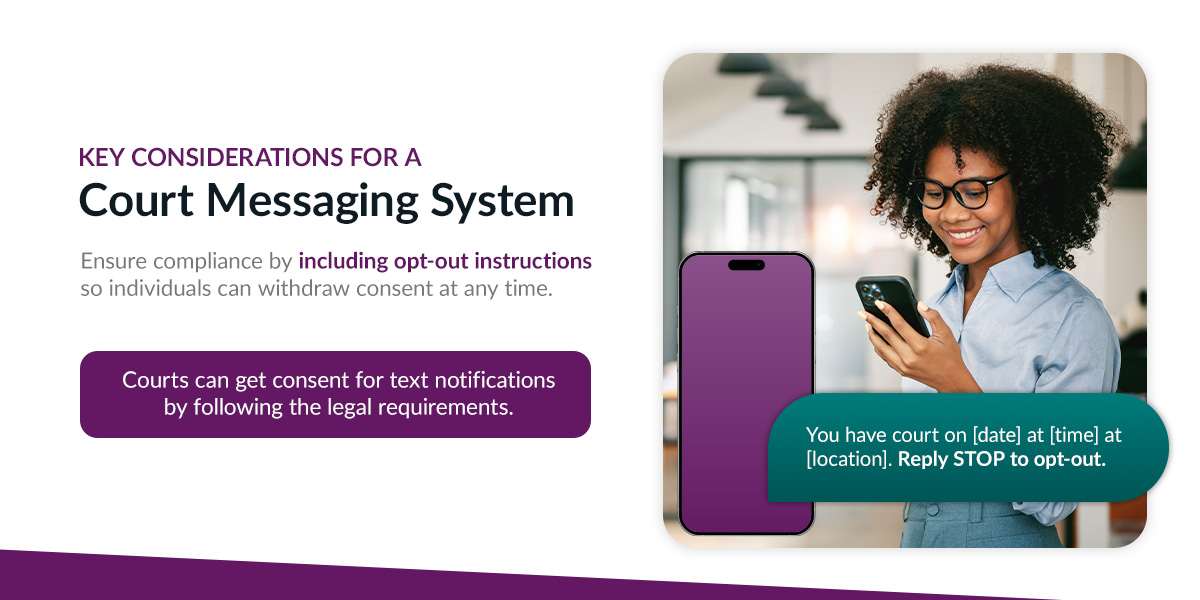
Courts can ensure compliance by including opt-out instructions so individuals can withdraw consent at any time. Partnering with a provider who understands 10DLC registration and follows SMS compliance guidelines takes the guesswork out of staying on the right side of the law.
How Do Courts Ensure Data Privacy and Security?
Data privacy and security are essential in court communications. Along with never sending any personal information via SMS, there are things to look for when looking for an SMS software provider that lets you know they are as concerned about privacy as you are.
These key protocols make all the difference:
- Identity verification: With role-based access controls, only authorized court personnel can access messages. Multifactor authentication adds another layer of protection against unauthorized access.
- Audit logging: Unalterable digital audit logs track who accessed what information and when, creating accountability and transparency.
- Vendor risk management: When selecting a third-party platform, courts should look for policies that mandate strict data rights, transparency and high cybersecurity standards.
What Essential Features Does My SMS Platform Need?
To implement SMS reminders for court dates, choose a platform that meets court system requirements. The best solutions manage high volumes, maintain compliance and integrate with existing workflows without adding administrative burden.
Look for a platform that offers:
- Bulk messaging capabilities to reach a wider audience.
- Personalized merge fields so each recipient gets their specific date and case information.
- Scheduling features that let you queue reminders days or weeks in advance.
- Two-way messaging so recipients can confirm attendance or ask questions.
- Automatic opt-out processing to meet compliance.
An API integration option is also valuable if your court uses case management software. It triggers automated reminders based on case data, reducing manual work and human error.
Practical Use Cases for SMS in a Judicial Setting
SMS reminders aren’t just for initial court appearances. Courts can use text messaging to improve operations, increase revenue collection and reduce administrative overhead.
Hearing and Arraignment Reminders
Hearing and arraignment reminders are the foundation of any court SMS system. A simple text with the date, time and location helps people overcome lost mail or forgotten voicemails. Automated text reminders can significantly reduce pre-trial incarceration and missed court dates compared to those who don’t receive reminders.
Sending automated texts is significantly cheaper than processing bench warrants or jailing defendants. Because texts reach people instantly, they’re far more effective than mailed notices that come late or get thrown away.
Payment and Fine Notifications
SMS payment reminders help courts reduce overdue balances and late fees. These texts reach people instantly with clear, actionable information. A quick message with the amount, a payment deadline and a secure URL makes it easier for people to stay on top of their fees.
It’s helpful to know how to send payment due date reminders to defendants. Keep messages concise—ideally under 160 characters—and always include your organization’s name, the exact amount due and a clear call-to-action with a direct payment link that includes the full URL of the court system. Just like with hearing reminders, you’ll need explicit consent before sending payment texts, and recipients should be able to opt out by replying “STOP” to stay compliant.
Jury Duty Alerts and Updates
Managing juror pools is inefficient and expensive when you’re relying on phone calls and mailed notices. SMS streamlines the process by letting jurors opt in through your court’s online portal. They can use their summons badge number or text it to a dedicated SMS line.
Once opted in, jurors will receive automated reminders, real-time status updates and dismissal notices—all without tying up staff time on phone calls. It’s a simple change that minimizes no-shows, cuts administrative costs and improves the jury experience for everyone involved.
Get Started With CompleteSMS
If you’re ready to implement an SMS reminder system that reduces failure-to-appear rates and saves your jurisdiction money, CompleteSMS can help. We’ve spent over 25 years helping organizations send business SMS from their computers.
CompleteSMS handles the compliance heavy lifting so you can focus on getting people to court. Whether you need simple hearing reminders, payment notifications or jury duty alerts, our tools work where you work. Our platform integrates seamlessly with your existing systems and workflows.
Ready to get started? Request a demo to see how courts are using SMS to improve appearance rates, or contact our team to discuss your unique needs!