

Two of the most common ways to engage with customers are email and text blasts. Both of these strategies have benefits, though organizations generally see more success with SMS messages over email. Email blasts are useful for lengthier content featuring visual components like graphics, but SMS messaging goes above and beyond to provide quick, actionable and personalized content that resonates and inspires action.
Discover why this strategy is more effective and what other elements you should consider when investing in a business communication strategy.
Mass Text vs. Mass Email: What’s the Difference?
SMS messaging is a tactic that involves sending communication—such as information, promotions, sales, content and other alerts—to mobile devices. Businesses can segment audiences based on interests, demographics and preferences to ensure subscribers receive relevant details at critical times.
Email is a more traditional form of communication that sends targeted messages to audience email inboxes. Email content tends to consist of newsletters, product announcements, promotion details and similar information, though it can also be used for appointment confirmations and event communication.
Both types of business communication can boost brand loyalty, increase engagement and nurture relationships. The most significant difference between these two strategies is when to use them and what to use them for. Although both strategies have their applications, many businesses can significantly benefit from optimizing SMS efforts.
Why Text Blasts Are More Effective
Depending on your industry and audience needs, you can find business emails and texts to be beneficial for various reasons. However, SMS messaging tends to be more effective across industries. Here’s why:
1. Increased Open Rates
SMS messages have a 98% open rate, nearly four times more than the open rate for emails. Additionally, an overwhelming majority of people generally respond to SMS messages within a half hour. In comparison, emails may sit in recipient inboxes for hours or even days before users get a chance to see them.
This increased open rate is especially valuable for organizations sending timely appointment reminders or breaking news information. If you need to get messages to your recipients right away and have them take quick action, SMS is the perfect solution.
2. Boosted Engagement Levels
The increased open rates of SMS messages translate to boosted engagement levels. SMS messages are generally shorter, allowing users to digest information quickly and determine a response action in a fraction of the time. Additionally, the personalized nature of these messages makes users more likely to search for more information or engage with the business further.
3. Deeper Personalization
A significant advantage of SMS messaging is personalizing content to grab attention and show audiences your commitment and care. Organizations can tailor messages by using subscriber names and pushing notifications related to their geographical location, demographics or interests.
In many cases, SMS messages have a more casual tone than generic email blasts, making communication feel more personal and conversational. SMS makes it easier to segment audiences and provide value to each subscriber. This deeper level of personalization can increase customer retention and better highlight your brand.
4. Instant Outreach
Another reason SMS is more effective than email is due to its instantaneous nature. Most people check their phones multiple times a day, increasing the chances of a user seeing a notification.
Additionally, SMS can be more successful because the message doesn’t have to compete with other businesses. While emails are often full of business correspondence, receipts and reminders, text inboxes offer a dedicated space for communication. This organized space can make the notification more noticeable and digesting the information easier. This instant outreach is also incredibly valuable for time-sensitive content and information.
5. Broader Audience Reach
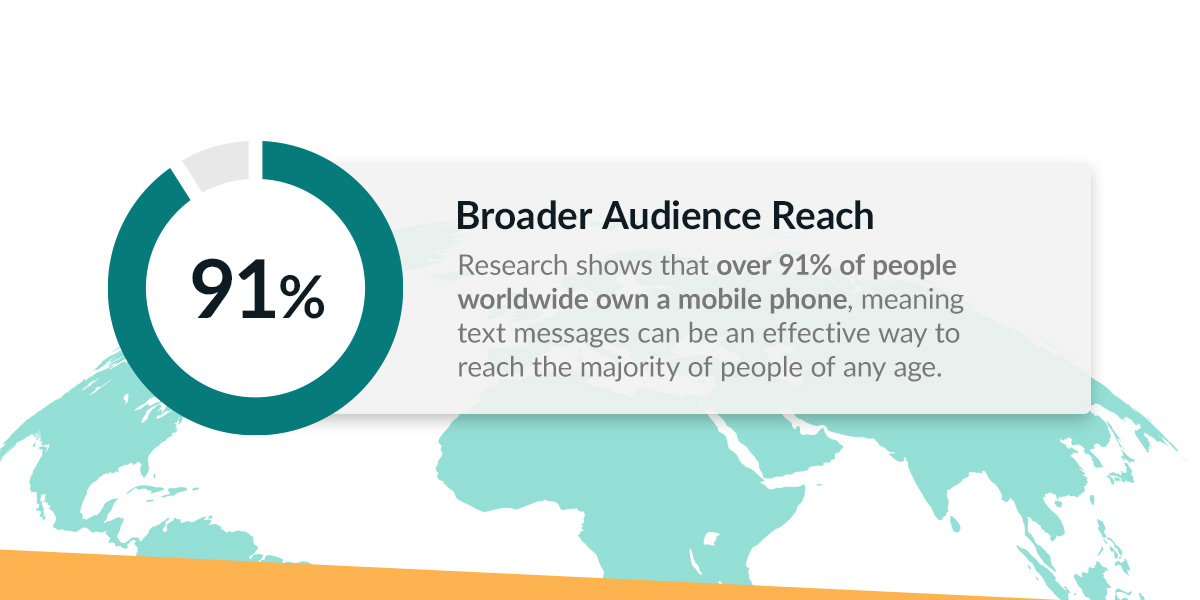
SMS is generally a better choice for a wide audience, being convenient for younger and older adults. Research shows that over 91% of people worldwide own a mobile phone, meaning text messages can be an effective way to reach the majority of people of any age. SMS messages can be sent to all mobile devices, so you can keep in touch with various recipients.
Additionally, younger audiences are already familiar with short-form content, making SMS attractive over long email messages. Organizations looking to captivate younger audiences and hold their attention should consider leveraging SMS for long-term brand loyalty.
Text vs. Email Communication: Other Points to Consider
Despite the overwhelming speediness and effectiveness of SMS blasts, you may want to consider a few other points when choosing between texts and emails.
- Message length: While you can send longer SMS messages, the general rule is to keep them to 160 characters or less. Going over this limit could result in your messages sending in several texts rather than one cohesive block. Additionally, people typically anticipate shorter content from SMS messages, so longer content could turn users away. Try adding website links to keep messages short.
- Layout options: Another element to consider is your message layout option. While you can try different templates for SMS, you run the risk of the text appearance showing differently on various devices, reducing the impact of your overall message. Keep your text messages simple, and consider email for more complicated layouts.
- Legal compliance and carrier guidelines: Between legal regulations like 10DLC and specific carrier guidelines, SMS messaging to subject to different standards. You’ll need to ensure your approach is compliant.
- Image usage: Email messages are more appropriate when using images and graphics. While SMS blasts can include emojis and other small elements, they’re less suitable for other forms of visual content. Use SMS for straightforward yet informative messages that don’t require visual elements.
- Life span: The shorter, more critical nature of SMS messages makes them more suitable for in-the-moment notifications that can lose value over time. Some users may delete messages after reading or reacting to them. With the right language, you can encourage users to take action immediately.
Embrace Texts for Mass Communication With CompleteSMS
Using email blasts or text blasts can be an effective strategy for strengthening customer loyalty, boosting engagement and driving business. However, SMS messaging is often much more effective by allowing deeper message personalization, providing instant outreach, expanding audience reach and boosting engagement levels.
When you need user-friendly SMS solutions, trust CompleteSMS to bring business communication to your fingerprints. CompleteSMS has more than 24 years of industry experience with SMS solutions. With extraordinary customer service, automation capabilities and all-encompassing SMS solutions, you can rely on our team to support your business and users.
Talk to an expert today to learn more about our capabilities and solutions!