

Summary
Quick Overview
Business SMS is an effective way for companies in New Zealand to connect with customers, send timely updates, and improve engagement. However, successful SMS campaigns require an understanding of local messaging regulations, customer consent requirements, and available messaging options. This guide explores the differences between standard and zero-rated short codes, one-way and two-way messaging, and best practices for managing opt-ins and opt-outs. Learn how CompleteSMS can help businesses navigate New Zealand's SMS requirements and build effective, compliant messaging campaigns.
Sending SMS in New Zealand:
Rules and Short Codes Explained
Planning to send business text messages in New Zealand? Before you start sending appointment reminders, customer updates or promotional offers, there are a few things to understand about local messaging rules, sender numbers and the difference between one-way and two-way SMS.
New Zealand has requirements designed to protect mobile users from unwanted messages, and mobile network operators have regulations for those messages. Get familiar with both, and you’ll be in a much better position to get your messages where they need to go.
Let’s break it down.
What Are the Rules for Sending Business SMS in New Zealand?
New Zealand’s Unsolicited Electronic Messages Act 2007 lays out the rules for commercial text messages. In short, businesses need permission before sending marketing texts, must clearly identify who’s sending them and provide a working way to opt out. They also need to be able to show that recipients agreed to receive those messages.
Here’s what that means in your day-to-day.
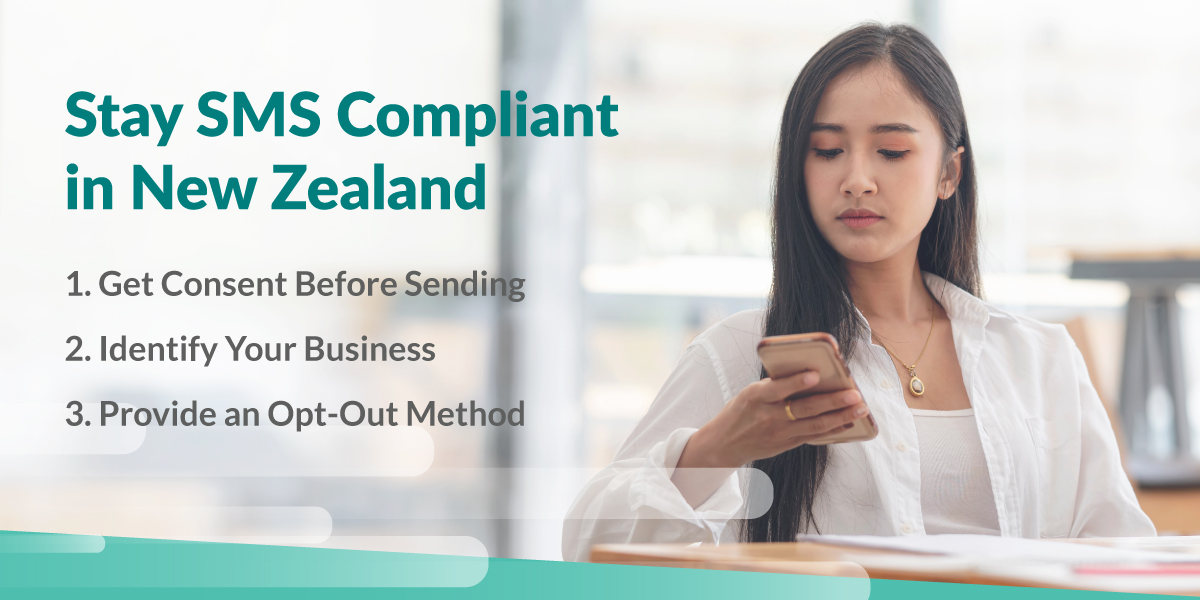
1. Get Consent Before Sending Messages
Consent can be express, inferred in certain circumstances or deemed under the Act’s specific conditions. Just because someone gave your company their mobile number doesn’t mean you have permission to send them marketing messages.
Best practices:
- Make it clear that people are signing up to receive SMS messages.
- Explain what types of messages they’ll receive.
- Use an unticked consent checkbox when collecting consent online.
- Keep records showing when and how consent was obtained.
For example, a sign-up form might say: I agree to receive promotional text messages from ABC Company.
During the short code application process, mobile network operators may also require evidence of consent when reviewing a short code application. That can include screenshots showing the opt-in wording and where it appears in the sign-up process.
2. Identify Your Business
Recipients shouldn’t have to play detective to figure out who’s texting them.
New Zealand law requires commercial electronic messages to clearly and accurately identify who’s sending the message.
A practical way to meet this requirement is to include your business name near the beginning of your message.
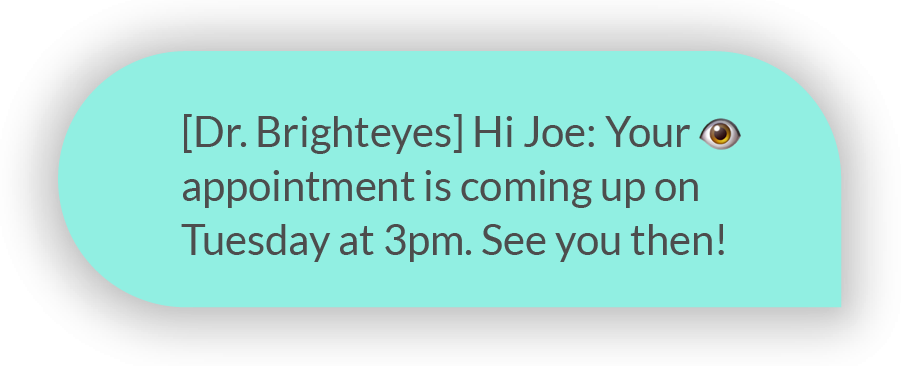
For example: The Ship Shop: Your furniture delivery is confirmed for Tuesday at 10 AM. STOP to opt-out.
That gives the recipient useful information right away and makes your message recognizable.
Recipients need to be able to opt out of receiving messages with ease, no hunting down directions or waiting for processing. Opt-out should be clearly stated in the SMS and actioned on immediately upon request, at no cost to the recipient.
This is commonly achieved by stating something like “STOP to opt-out” at the end of each message.
Make sure your message provider can process opt-out requests and that you stop sending commercial messages to people who have unsubscribed forever, unless they opt-in voluntarily.
And yes, this applies even when you have a great offer. A discount on Friday isn’t a reason to text someone who opted out on Wednesday.
Understanding New Zealand SMS Short Codes
A short code is a 4-6 digit number used to send and, where supported, receive business text messages. In New Zealand, mobile network operators apply specific requirements to short code messaging, including rules about consent, message content and whether recipients may be charged for replies.
Short codes can be shared or dedicated. Shared codes are just what they sound like, you’re sending your messages using the same number by other companies. You’re sharing it.
Dedicated numbers are solely used for your company’s messaging. When someone sees this number come across their phone, they will know it’s you every time. (You’re also not sharing the capacity bandwidth, no one to get in your way, which is nice for those high-volume sends.)
Just for clarification’s sake, these are not the same as sender IDs. A sender ID must include at least one letter and New Zealand is one of many countries that doesn’t support them.
That’s not all, there’s more…there’s also two important short code arrangements to understand: standard short codes and zero-rated, or Free to End User (FTEU), short codes.
Standard Short Codes
Standard short codes can be used to send outbound messages. Typically these are used for 1-way communication, but depending on the configuration, recipients may also be able to reply, though their mobile carrier will charge them for doing so.
Where replies can incur charges, the outbound message must include a clear warning.
For example: Cabanna Spa: Your booking is confirmed. Standard SMS charges may apply to replies. STOP to opt-out.
This arrangement may suit certain transactional or informational messaging use cases, depending on the approved configuration and applicable network requirements.
Zero-Rated AKA Free-to-End-User (FTEU) Short Codes
With a zero-rated short code, recipients aren’t charged by their mobile carrier for replying to the message, the business.
There are some use cases that require to use a zero-rated short code, like promotional and marketing messages.
That distinction matters when planning SMS campaigns, if it’s promotional and you’re asking customers to reply to claim an offer, enter a competition or request more information, you need to consider both the short code configuration and the cost of handling replies.
One-Way vs. Two-Way SMS: What’s the Difference?
Not every business text needs a conversation. Sometimes you just need to deliver information. Other times, you need the recipient to respond.
What Is One-Way SMS?
One-way SMS is messaging designed primarily for sending information to recipients without expecting a reply.
Common examples include:
- Appointment reminders and confirmations
- Service notifications and delivery updates
- Operational alerts for employees
- Schedule changes and business announcements
One-way messaging can be a good fit when the goal is to communicate information rather than collect responses.
However, one-way messaging doesn’t automatically mean you can ignore consent or other compliance requirements. Commercial messages must still meet the applicable legal requirements, and the approved sender configuration must suit your use case. But is does mean that you can likely opt for the standard code, which is often less cost per message.
What Is Two-Way SMS?
Two-way SMS allows recipients to reply to a message, making it possible to collect information or interact with customers and employees.
For example, a business might send: Shocking Electric: Please confirm you’ll be home to let the electrician in on Fri. Reply YES to confirm or NO to reschedule. STOP to stop.
Other uses include:
- Confirming or changing appointments
- Collecting responses to staff announcements
- Letting customers request information
- Responding to service notifications
- Running approved promotional campaigns that invite replies
Two-way messaging can make SMS more useful because recipients can respond directly from their phones, without needing to call your office or log in to a separate system.
Keep in mind that two-way functionality depends on the short code and messaging configuration. If recipients may be charged for replies, the required charge warning must be included.
What Do Businesses Need to Know Before Applying for a Short Code?
Getting a short code involves more than choosing a number. Mobile network operators review applications to ensure the proposed use and messaging practices meet their requirements.
- You should be prepared to supply:
- Your business and contact details
- A description of how you’ll use SMS
- Examples of the messages you’ll send
- Your opt-in wording and evidence of consent
- Details of how recipients can unsubscribe
- Information about whether messages are one-way or two-way
The application is reviewed by the provider and telcos before the short code is approved and configured. It’s not a difficult process and your messaging provider will likely guide you through the process. Provisioning can take 4-8 weeks, so it’s worth planning ahead if you have a launch date or campaign deadline.
Choosing the Right SMS Configuration
The best messaging option depends on what you’re sending, how many messages you need to send and whether recipients need to reply.
For routine business notifications, standard messaging may be all you need. For higher-volume programs that require dedicated sender numbers, greater throughput or a particular two-way messaging configuration, a dedicated short code may be worth considering.
Before making a decision, think about:
- Message volume:
How many messages do you expect to send, and how quickly do they need to be submitted? - Message purpose:
Are you sending transactional notifications, operational updates or promotional messages? - Reply requirements:
Do recipients need to respond, and could those replies incur charges? - Compliance:
Can you demonstrate consent, identify your business and process opt-outs appropriately? - Budget:
Have you accounted for short code setup, ongoing fees, outbound messages and inbound replies?
Make New Zealand Business SMS Easier With CompleteSMS
CompleteSMS has supported messaging to New Zealand for years, helping businesses communicate with customers, employees and other audiences.
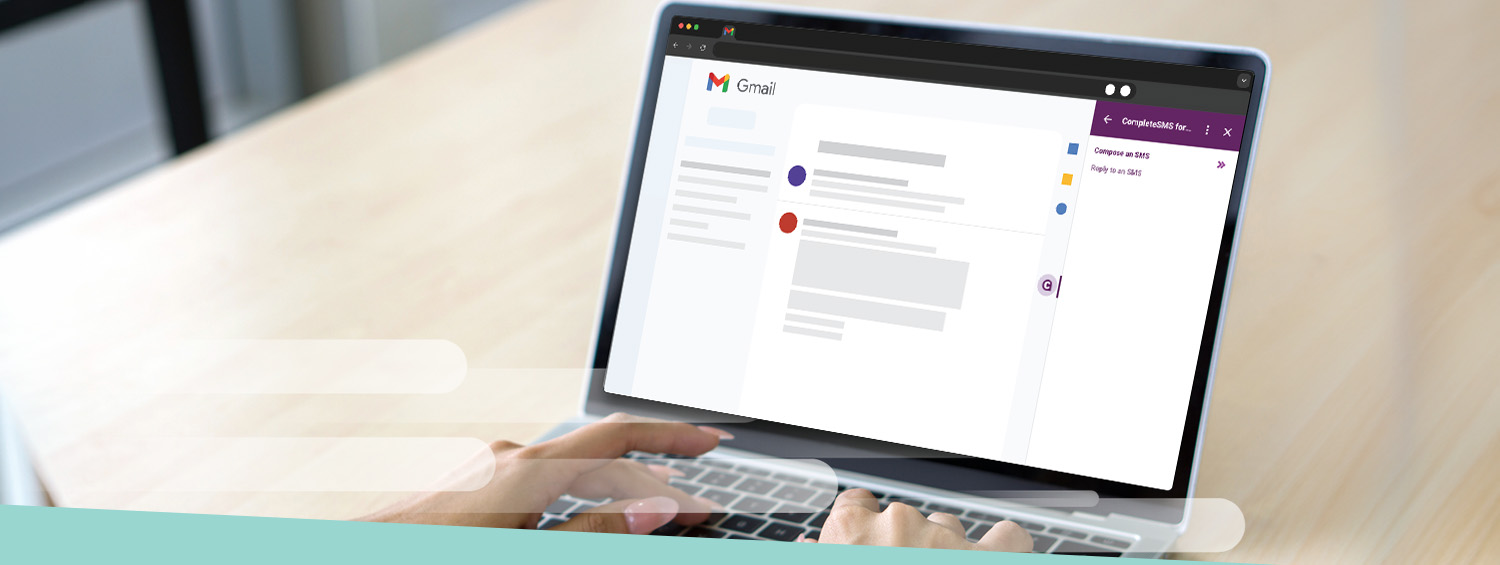
We offer flexible ways to send messages, including our web portal, bulk SMS, Outlook and Gmail integrations, Email API and HTTPS API. Use one or all of the solutions for no extra cost.
And because messaging requirements can get complicated, you don’t have to figure everything out on your own. Our team can help you explore your options, understand the setup process and determine which approach fits your business.
Need help choosing the right messaging option for New Zealand? Get in touch with CompleteSMS, and let’s work out what makes sense for your business.